Industrial ERP is no longer a “nice to have”
For organisations that design, manufacture, install, and service complex assets, ERP has never been a simple back-office system. It sits at the intersection of engineering, production, projects, service, and finance to connect long asset lifecycles with day-to-day operational reality.
Yet many industrial manufacturers and project-based businesses are still running on ERP platforms originally designed for generic, transaction-heavy environments. Over time, this mismatch creates friction: workarounds replace workflows, customisations multiply, and critical operational insight becomes harder to access just when it is needed most.
This is why industrial ERP is no longer a “nice to have” for asset-heavy organisations. It is becoming a prerequisite for staying competitive and profitable.
The complexity that generic ERPs struggle to handle
Industrial and project-based organisations operate in a fundamentally different way to high-volume, make-to-stock businesses. Assets are often engineered to order. Projects span months or years. Revenue recognition is tied to milestones, not shipments. Service obligations extend long after installation.
Generic ERP systems can support these requirements but usually only through heavy configuration or custom development. Over time, this creates systems that are difficult to maintain and upgrade, largely due to being heavily dependent on a small number of internal experts.
More importantly, it fragments the end-to-end view of the asset. Manufacturing, project delivery and service often sit in separate modules or even separate systems, making it difficult to understand profitability and cost across the asset lifecycle.
Industrial ERP takes a different approach.
What “Industrial ERP” really means
True industry-focused ERP is not about surface-level templates or pre-built reports. It is about modelling how asset-centric businesses actually operate.
For industrial manufacturing and project-based industries, that includes:
- Engineering and manufacturing alignment, where design changes flow through production without manual intervention.
- Project-centric execution, where costs, activities, and resources are managed in real time within one system.
- Asset lifecycle visibility, from initial build through installation, service, and eventual replacement.
- Service integration, where maintenance, spares, warranties, and field service are part of the same operational picture.
When these capabilities are native to the platform, organisations spend less time forcing the system to fit their business and more time using it to improve performance.
Why this matters now
The case for industrial ERP has sharpened significantly in recent years. Industrial organisations are facing pressure on multiple fronts: supply chain volatility, skills shortages, sustainability targets, and customers demanding higher uptime and service levels.
At the same time, margins are increasingly made (or lost) after the asset is delivered. Service contracts, lifecycle optimisation, and outcome-based models require accurate data and seamless coordination across functions.
ERP systems that stop at the factory gate are no longer sufficient. Businesses need platforms that support the full asset journey and adapt as business models evolve.
Choosing a platform built for asset-centric industries
This is where IFS has established a strong reputation. Rather than trying to be everything to everyone, IFS has focused on industries where assets, projects, and service are core to value creation. Its ERP capabilities are designed to support complex manufacturing, project delivery, and long-term service operations within a single, coherent platform.
For industrial manufacturers and project-based organisations, this means fewer compromises. Engineering, production, projects, and service are not bolted together, they are designed to work symbiotically. The result is better visibility, stronger control, and a system that can evolve alongside the business.
Just as importantly, IFS supports an incremental approach. Organisations can modernise in phases, reduce risk, and start realising value without committing to disruptive, all-or-nothing transformation programmes.
Scale and track record are also on their side, IFS is a global enterprise software provider with thousands of employees worldwide and over one million users relying on its technology every day. IFS Cloud ERP is used across complex, highly regulated, and operationally demanding industries, providing tangible evidence that the platform performs in real-world conditions, outside of controlled demonstrations.
The importance of the right delivery partner
Even the best industrial ERP platform can fall short if it is implemented with a generic mindset. Asset-heavy organisations need partners who understand the operational realities of industrial manufacturing and project delivery, not just the software.
An experienced delivery partner like Anthesis Ltd brings that understanding to the table. With an honest “tell it like it is” approach and a strong commitment to doing what is right for the customer, always, Anthesis builds strong relationships driven by practical decision-making, and a focus on long-term outcomes. That means working with you to challenge unnecessary complexity, align technology decisions with business priorities, and help build internal capability and strengthen user adoption.
This approach significantly reduces risk, particularly for organisations transitioning away from heavily customised legacy systems.
A strategic foundation for the future
Industrial ERP is about removing complexity by aligning systems with the way asset-heavy businesses actually operate. For industrial manufacturing and project-based organisations, that alignment is increasingly essential.
With the right platform, supported by the right partner, ERP becomes more than an operational necessity. It becomes a strategic foundation for managing assets, delivering projects, and supporting customers across the full lifecycle, today and well into the future.
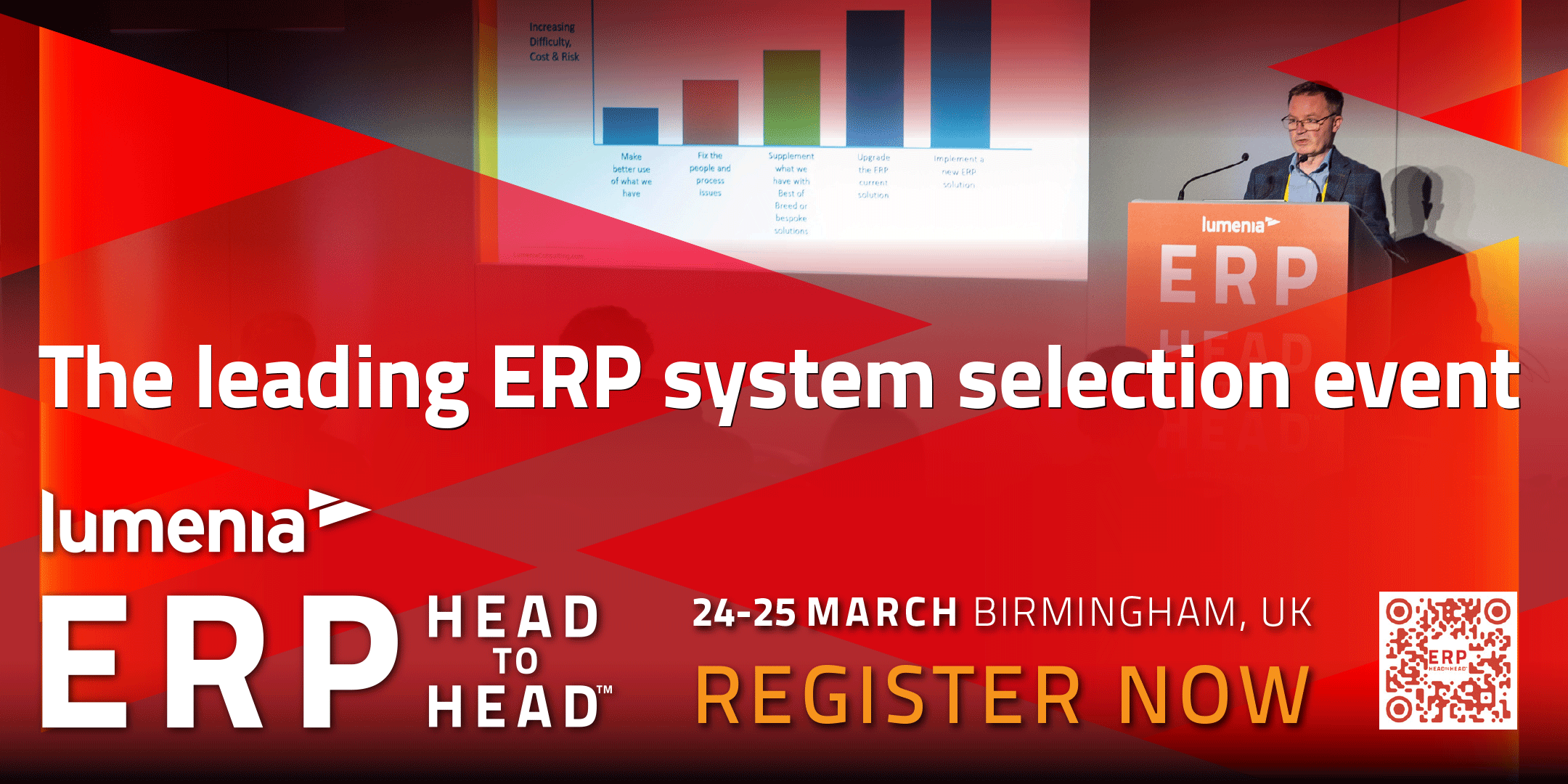
Visit IFS and Anthesis at Stand 13 at the Lumenia ERP HEADtoHEAD™ for an honest ERP conversation with clear, straightforward answers.